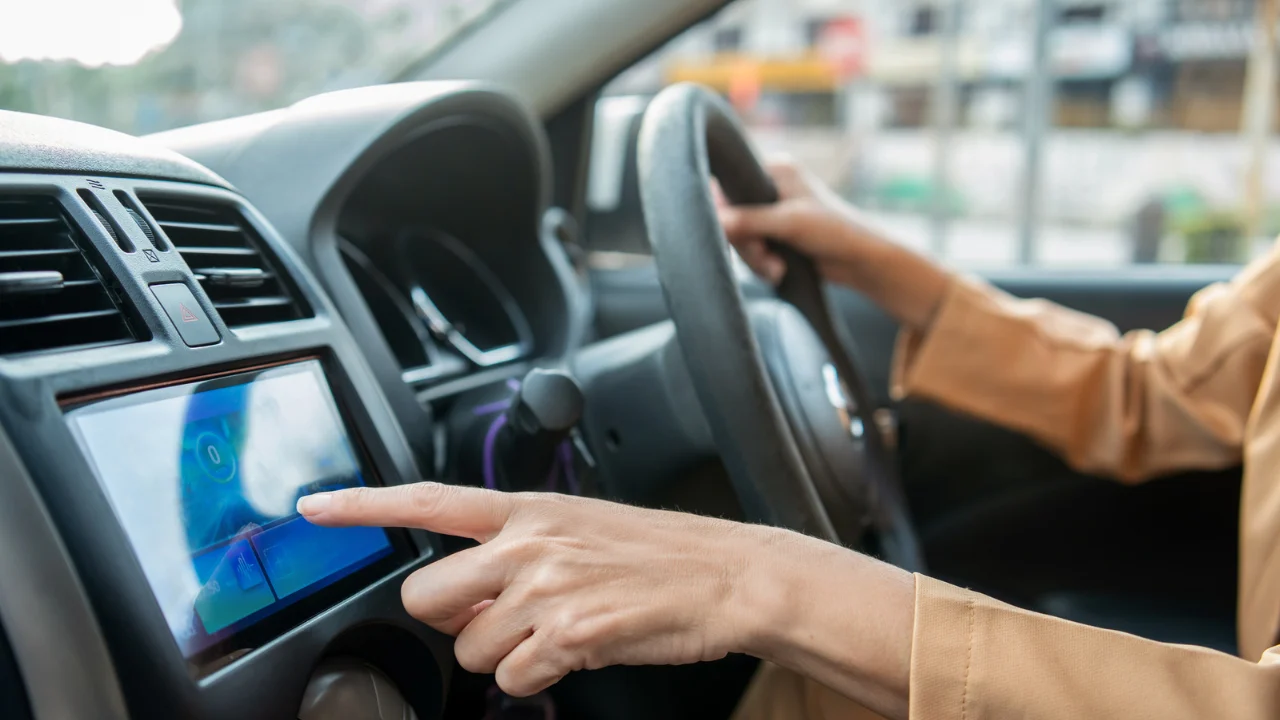
Your car may know more about you than you think: the privacy risks of connected vehicles
Published on November 18, 2026 by Chelsea O'Grady and Selwyn Black
We increasingly think of our cars in terms of the technology they offer: navigation, smartphone connectivity, driver assistance and remote access. What is less obvious is the amount of personal information that can be generated while we use those features.
A modern connected car can potentially build a detailed picture of its users, including their movements, driving habits and interactions with the vehicle. Australia’s Privacy Commissioner has warned that the information generated by connected vehicles can provide increasingly detailed insights into our lives.
Connected technology offers genuine safety and convenience benefits. However, it also prompts an important question: how much do we really know about the information our cars collect about us, and what happens to it once it’s been collected?
What does your car know about you?
In a May 2025 speech on connected cars, Privacy Commissioner Carly Kind identified a broad range of information that modern vehicles may collect. This includes information about the vehicle itself and how it is driven, location and recent trip data, voice commands and images captured by cameras, as well as information obtained from connected phones and applications.
But the privacy concern here is not simply that cars can collect this data. Indeed, much of this data collection supports useful features, including emergency assistance, remote vehicle controls, navigation and traffic services.
However, the important questions we should be asking are: what is collected, why it is needed, who can access it, how securely it is held and what happens to it afterwards?
Why location data matters
Location information is particularly revealing.
A record of where someone travels may indicate where they live and work and potentially reveal visits to health providers, places of worship or other locations which may reveal sensitive information about a person.
In the OAIC’s 2023 Australian Community Attitudes to Privacy Survey,(2023 Survey) 52% of respondents identified location data as one of the biggest privacy risks faced today, while 87% considered it unreasonable for an organisation to track someone’s location where that tracking was not required to provide a location-based service. (quoted by Carly Kind in a speech to the UNSW Privacy and Security Regulation for Connected Cars Workshop on May 2025)
The concern is not only what an individual piece of information reveals about a person, but what can be learned when different information is combined.
Do drivers really know what they are agreeing to?
Privacy terms are unlikely to be foremost in someone’s mind when buying a new car – but these terms aren’t always easy to locate or understand in any event. Connected services may involve several different privacy notices and terms spread across vehicle documentation, apps and online accounts.
The Privacy Commissioner has referred to research finding that consumers would need to read an average of approximately three documents per car brand, requiring an estimated 45 minutes to an hour. (Dr Katharine Kemp referred to in her article Driving Blind: The Unexamined Privacy Risks of Connected Cars posted 10 Jan 2025)
Users may also be automatically opted into some connected features, while opting out may be difficult or affect other vehicle functions.
This creates a fundamental question: how meaningful is consent if someone cannot realistically use a product without accepting the collection of their information?
What does Australian privacy law say?
The principal legislation is the Privacy Act 1988 (Cth) and the Australian Privacy Principles (APPs).
Whether vehicle data is “personal information” for the purposes of this legislation will depend on the circumstances and whether an individual is identified or reasonably identifiable from that information. Different pieces of connected-car data may also be combined to reveal information about an identifiable person.
Biometric information used for identification purposes, including certain voice or facial information, may constitute “sensitive information” and attract additional requirements under the Act.
Privacy obligations also extend beyond collection. APP 6 restricts the use or disclosure of personal information for other purposes unless an exception applies, while overseas disclosures may engage APP 8.
Depending on the circumstances, connected vehicles may also raise issues under surveillance, consumer, telecommunications, cybersecurity and motor-vehicle laws.
It is not only the driver’s privacy
The person who bought the car is not necessarily the only person whose information it collects.
Cars are often shared between family members, carry passengers and may be used as company, fleet or rental vehicles. Information can therefore be collected about people who have never seen, let alone agreed to, the manufacturer’s privacy terms.
This becomes particularly important when a vehicle changes hands. Connected cars may retain information associated with phones, previous trips, addresses and user accounts.
A digital clean-out is increasingly important when selling or returning a connected vehicle. Accounts and devices should be unlinked and stored personal information removed where possible.
Privacy can also be a safety issue
The risks extend beyond unwanted profiling or advertising.
The eSafety Commissioner Julie Inman Grant has highlighted reports of connected vehicle services having allegedly been used by perpetrators of domestic violence to track former partners. Some connected vehicles also offer remote access to certain vehicle functions, adding another potential dimension to the risk. (eSafety advisory (30 November 2025)
In some circumstances, connected-vehicle privacy can become an issue of physical safety as well as data protection.
What can motorists do?
Drivers can take some practical steps:
- Read the manufacturer’s privacy information, particularly provisions dealing with location, camera, audio and connected-service data.
- Check privacy settings in the vehicle and associated apps.
- Understand who receives the information, including service providers and overseas recipients.
- Think before connecting a phone, particularly where contacts or other information may be synchronised.
- Consider other users, especially with family, company, fleet and rental vehicles.
- Remove personal information when disposing of the vehicle, including saved addresses, connected devices and user accounts.
What happens next?
Regulators are paying attention. In March 2026, the OAIC said it would advance Commissioner-initiated investigations into connected cars. It has since been publicly reported that Toyota and Hyundai are under investigation in relation to their connected-vehicle data practices.
As vehicles become increasingly connected, privacy can no longer be treated simply as wording buried in terms and conditions.
For drivers, the question when considering their next vehicle may no longer be simply “What can this car do?”
It may also be: “What does this car know about me?”
Disclosure and important note: This article is based on our own legal research and thinking. Some of its content has been drafted with the assistance of artificial intelligence. The authors have checked and approved this article, including the AI generated content, for publication.
This article was published on 18 November 2026 by Carroll & O’Dea Lawyers and is based on the relevant state of the law (legislation, regulations and case law) at that date for the jurisdiction in which it is published. Please note this article does not constitute legal advice. If you ever need legal advice or want to discuss a legal problem, please contact us to see if we can help. You can reach us on 1800 951 006 or via the Contact us page on our website. (www.codea.com.au).